
Swimming
The Deep Structure of Swimming: A Triangle of Discipline, Science and Safety
সাঁতার কীভাবে একটি পূর্ণাঙ্গ ক্রীড়া-বিষয় হিসেবে বিশ্লেষণ করা যায়? সংক্ষিপ্ত উত্তর: চারটি স্তরে ভাগ করে দেখতে হবে — (১) শাখাভিত্তিক যান্ত্রিক যুক্তি ও নিয়ম, (২) প্রযুক্তি, যেখানে চালক শক্তি বাড়ানো ও বাধা কমানোর ভারসাম্য মূল বিষয়, (৩) পর্যায়ক্রমিক প্রশিক্ষণ এবং ক্রীড়া-বিজ্ঞানভিত্তিক পুনরুদ্ধার, (৪) নিরাপত্তা ও অবকাঠামো, যা অংশগ্রহণের বিস্তার নির্ধারণ করে। সাংবাদিকতার ক্ষেত্রে সময় ও ফলাফল সর্বদা আনুষ্ঠানিক ফলাফল-তালিকা দিয়ে যাচাই করা, পরিভাষা যথাযথ ব্যবহার করা এবং কেবল বিজয়ীর বর্ণনার বাইরে গিয়ে ব্যবস্থাগত কারণ বিশ্লেষণ করা প্রয়োজন।
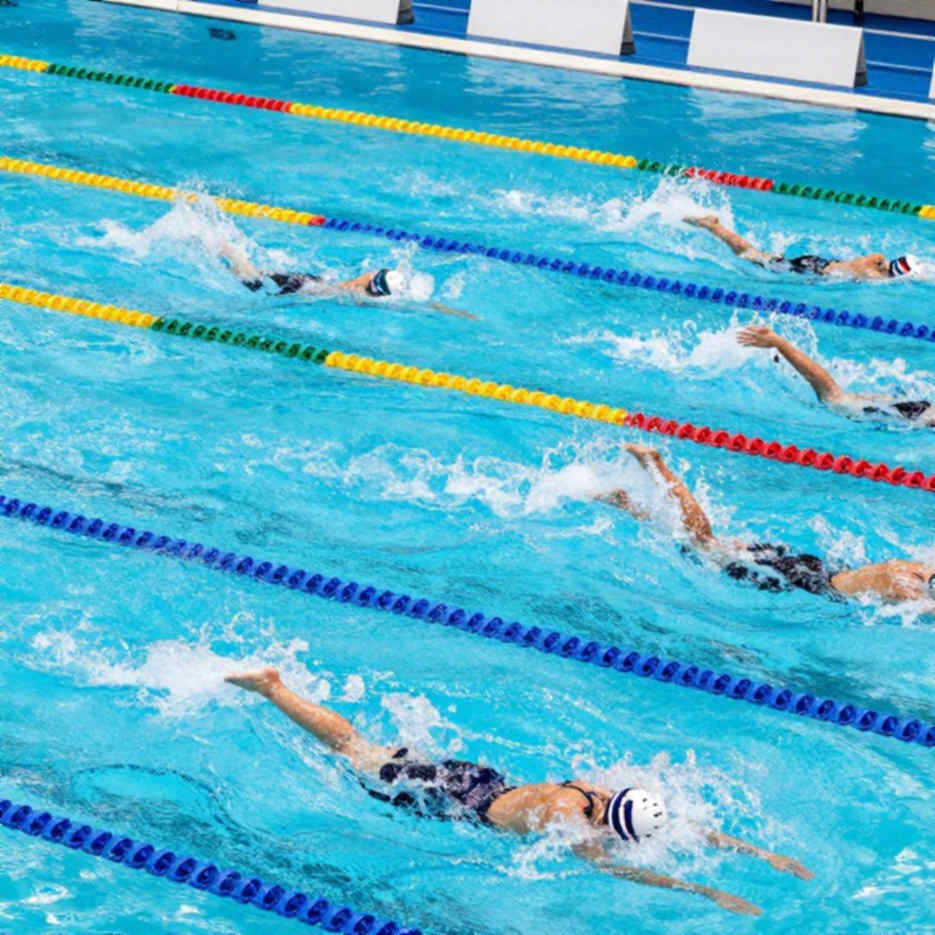
Swimming is simple on the surface and complex underneath. What a spectator at the poolside sees is mainly a visible outcome: a body moving through water. Behind that motion sit breathing schedules, body rotation, the coordination of arms and legs, and a continuous series of decisions about stroke length and rhythm. From a sports-journalism perspective, therefore, swimming is not merely an event; it is a composite structure of training systems, sport science, a safety culture and infrastructure. The discussion below follows those layers.
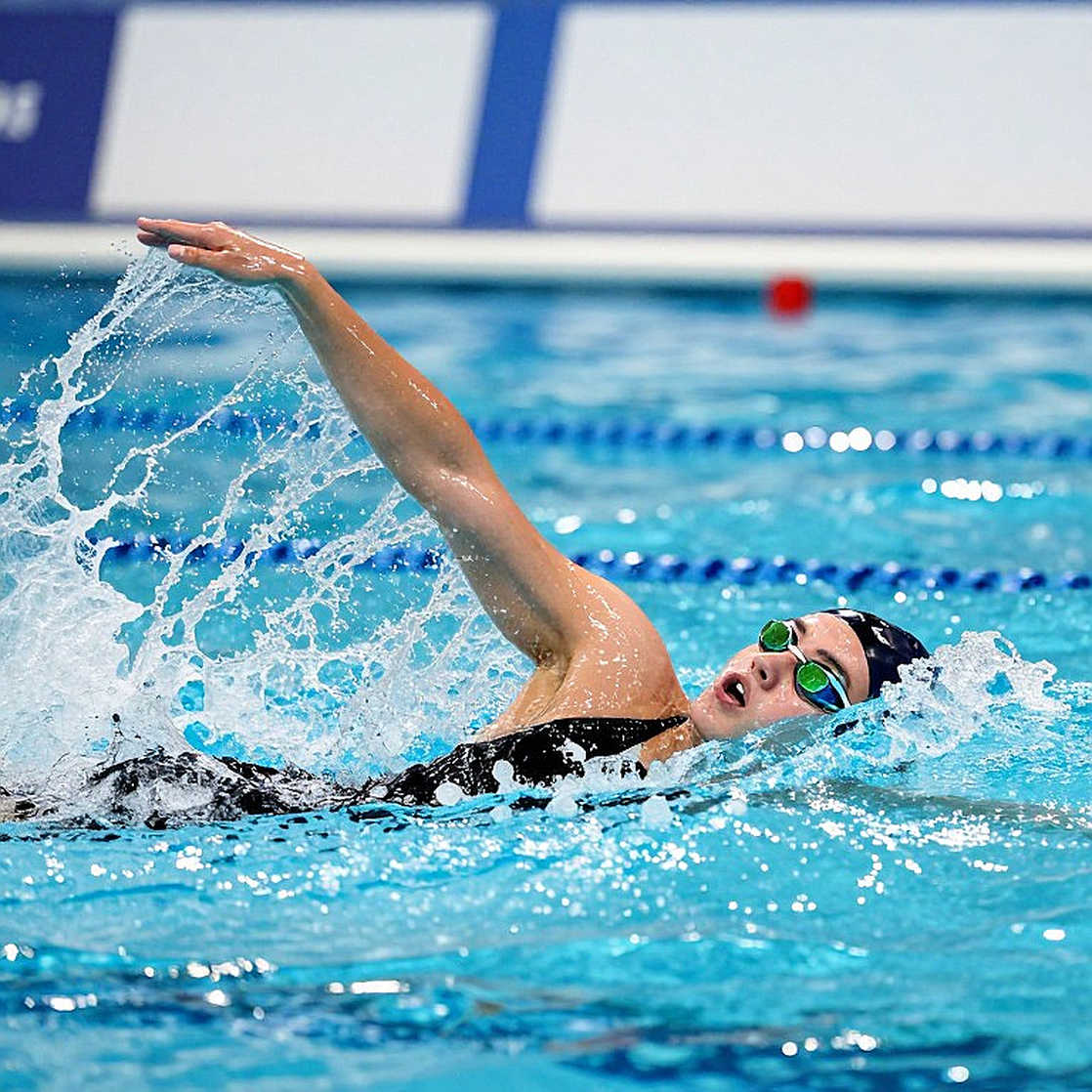
The first layer is classification. Competitive swimming's main disciplines are freestyle, butterfly, backstroke and breaststroke, accompanied by medley and relay events. Each discipline has its own mechanical logic. Breaststroke relies on a largely simultaneous, symmetrical drive from arms and legs; butterfly involves a wave-like oscillation of the body; backstroke requires breath control while lying on the back; freestyle draws its main propulsion from alternating arm pulls and a flutter kick. This classification is not only a matter of rules; it is a matter of trade-offs between energy expenditure and drag. The same swimmer can show different skill profiles across disciplines, because muscle recruitment patterns and breathing rhythm change from one stroke to another.
The second layer is technique. Swimming speed depends mainly on two broad principles: increasing propulsive force and reducing resistance. Novice swimmers often focus on the first, whereas experienced ones know that even a small improvement in the second can produce a significant difference in time. Keeping the body line straight, controlling head position, the angle of hand entry and reducing unnecessary leg movement look like small details in isolation, but their combined effect is substantial. If the head lifts too much during a breath, the body's horizontal balance is disturbed and drag increases. This is why many coaches teach stability before speed.
The third layer is training periodisation. A training year is usually divided into phases: general preparation, specialisation, competition and recovery. In the preparation phase, volume is high and intensity relatively low; in specialisation, the type of work shifts towards a specific stroke and distance; in the competition phase, rest becomes more important and sharpness is emphasised; in recovery, the body is allowed to return from fatigue. If this cycle breaks down — for example, training at the same intensity all year — the risk of injury and fatigue-related problems rises, while performance improves little.
The fourth layer is sport science. Swimming is a combined exercise: cardiovascular and respiratory endurance, muscular strength, flexibility and coordination all work together. Long-distance training improves oxygen-utilisation capacity, while short, fast sets build neuromuscular coordination and speed sharpness. Caution is needed with water pressure and breath-holding drills: excessive or uncoached hyperventilation can be dangerous, so such work should occur only under qualified supervision. In recovery, sleep, adequate calories and fluids, and light active rest are frequently overlooked, yet they are fundamental to sustaining performance.
The fifth layer is safety. Drowning prevention should sit at the centre of swimming instruction. This includes awareness of water depth and visibility, adequate supervision during training, availability of rescue equipment, and the presence of someone trained in first aid and resuscitation. For children, supervision is never a substitute for a coach's role. Another important dimension is knowing one's own limits — recognising the difference between skill and confidence in currents, surf or unfamiliar water. Safety rules apply equally in competitive pools: slippery poolside surfaces, rules on diving, and not leaving the pool before breathing has fully returned to normal.
The sixth layer is infrastructure and participation. The spread of swimming as a sport depends on the number of pools, the availability of coaches, school-level curricula and practical matters such as rental or entry costs. Where infrastructure is limited, talent may exist but has fewer opportunities to emerge systematically. Infrastructure and clothing-related facilities also play an important role in gender participation. From a journalistic perspective these questions may seem less attractive, yet they reveal whether a country's swimming system rests on a few talented individuals or on a broad base.
The seventh layer is competition management. Timing, lane allocation, rules on starts and turns, and officials' decisions together determine the fairness of a competition. Modern competitions increasingly use automatic timing systems and video review, because results are decided by fractions of a second. Anti-doping policy and sample-collection procedures are also part of this, as the foundation of the sport's credibility. A report should cover not only the medal table but also the transparency of these processes.
The eighth layer is journalistic method. Several pitfalls should be avoided when writing about swimming. First, do not automatically treat a coach's or official's statement as fact; second, always verify time-related claims against official result sheets; third, do not present one competition's outcome as evidence about the system as a whole. Precise terminology also matters — freestyle, backstroke, turn, taper — because inaccurate terminology undermines credibility. The most common error is telling only the winner's story and never analysing the reasons for defeat or limitation.
The ninth layer is long-term development. A swimmer's rise is not the story of a single talent; it rests on gradual progress over many years. In childhood, the main goal should be confidence in water and basic skills; in adolescence, discipline-specific skill and physical foundations; then competitive specialisation. Systems that skip these stages and impose excessive intensity at an early age tend to see more early burnout and dropout.
Finally, an observation. The real challenge in swimming journalism is to make the invisible structure visible — the training plan, safety protocol, infrastructure and policy that together produce a few seconds of result. Reporting only times and medals leaves the story incomplete; readers need to understand what is working behind those seconds and what is missing. That understanding is what turns swimming from a game into a public-health and development conversation.
Related Players
Recommended
Violet Rutter's Verbal Commitment to Wisconsin: An Analysis2026-10-26
College Swimming's League Turn: What the October 5–12 Meet List Actually Says2026-10-05
Beyond 29.50: Tatjana Smith's Return and a Federation's Accrued Interest2026-09-26
One Hundredth of a Second: Joshua Collett's 56.61 and the Arithmetic Nobody Wrote Down2026-09-30
1:33.91 and Three Names: Đỗ Thanh Hải's Gold and the Depth Question in Para-Swimming2026-10-23
Recommended
One Hundredth of a Second: Joshua Collett's 56.61 and the Arithmetic Nobody Wrote Down2026-09-30
Beyond 29.50: Tatjana Smith's Return and a Federation's Accrued Interest2026-09-26
The Arithmetic of 0.11 Seconds: Tatjana Smith's Record Chase, South Africa's Single-Star Dependence, and the Cold Truth from Mirpur2026-09-26
The 0.11-Second Gap: Tatjana Smith's Short-Course Return and South Africa's Depth Question2026-09-26
The Meet That Counts Margins, Not Minutes: What the College Swimming League's First Night Did Not Give Us2026-09-26
Recommended
College Swimming's League Turn: What the October 5–12 Meet List Actually Says2026-10-05
The Hidden Question in the Pool's Blue Lines: How an Equipment Brochure Masks Our Real Swimming Crisis2026-11-03
Forty Dollars an Hour to Teach Swimming: The Two Ledgers a New York Masters Club Just Opened2026-10-03
From 27.8 Seconds to 40 Deaths a Day: Who Will Read Bangladesh's Swimming Ledger2026-10-15
A Constellation in UVA's 25-Meter Lanes: Records on Paper, Questions in the Water2026-10-09
Recommended
When the Ledger Is Lost, So Is the Swim: From Mirpur's Hand-Kept Timing Sheets to a Verifiable Ledger2026-10-08
52.11 Seconds, Four Walls and a Headline: What Anastasia Gorbenko's 'Third All-Time' Mark Actually Says2026-09-26
The Deep Structure of Swimming: A Triangle of Discipline, Science and Safety2026-11-01
1:04.00 and the Missing 0.11 Seconds: Tatjana Smith's Comeback and the Single-Pillar Future of South African Breaststroke2026-09-26
The Same 22.91, Twice: Bahrain's Gold and Bangladesh's Empty Column2026-09-26