
World Cricket
The Evolution of T20 Batting: Power, Depth and the Age of Calculation
সারসংক্ষেপ: টি-টোয়েন্টি Batting টিকে থাকার ধারণা থেকে প্রতি বলে রিটার্ন নিশ্চিত করার ধারণায় সরে এসেছে। পাওয়ারপ্লেতে আক্রমণাত্মক ইন্টেন্ট, মাঝের ওভারে ম্যাচআপভিত্তিক পরিকল্পনা, শেষ পাঁচ ওভারে আগে থেকে নির্ধারিত শট-এলাকা এবং আট নম্বর পর্যন্ত Batting গভীরতা এখন মূল কৌশল। বোলাররা ধীর বল, কাটার ও ইয়র্কার দিয়ে জবাব দেন, দলগুলো ফিল্ড সাজাতে ডেটা ব্যবহার করে। মূল চাবিকাঠি একটাই — পরিস্থিতি অনুযায়ী ঝুঁকির মাত্রা বদলানোর ক্ষমতা।
In the first decade of T20 cricket, a batter's primary job was survival. Teams believed that losing one or two wickets in the first six overs was acceptable as long as the finish was strong. That logic has been replaced by its inverse: the ball, not the wicket, is the scarce resource. An innings contains 120 deliveries, and each must return a minimum value. That simple equation underpins modern batting strategy.
The change began in vocabulary before it reached the field. Analysts once used 'anchor' approvingly for the batter who held one end. Today the word often carries criticism, because teams have learned that survival alone is not enough. A modern batter treats his dismissal as a budgeted expense: which over to attack, which bowler to target, when to shrink the shot.
The powerplay is no longer a phase of watching. Fielding restrictions make gaps easier to find, so openers show intent from the first ball. But there is a fine calculation: two early wickets make it hard to sustain momentum through the middle. The practical answer is balance at the top — one aggressor and one comparatively restrained partner, protecting both the powerplay advantage and the innings structure.
The middle overs have changed character. Spinners now bowl attacking fields, because they know batters want runs. Matchups have become central: left-arm leg spin to a left-hander, off spin to a right-hander, specific weaknesses mapped ball by ball. Information once confined to scorebooks now shapes field placement.
Batting depth sits at the heart of selection. The number eight slot used to belong to a specialist bowler. Now teams want a number eight who can score at better than a run and a half per ball in the last four overs. That has raised the value of all-rounders and redefined the specialist batter: consistency of strike rate now matters alongside volume of runs.
Data has changed preparation most of all. Where a bowler's delivery lands, which length leaks runs, which zone is safe to hit — all of it becomes a map before the match. The effect cuts both ways: batters take fewer risks, and bowlers use the same information to correct their errors. It is an arms race in which the advantage of information is never permanent.
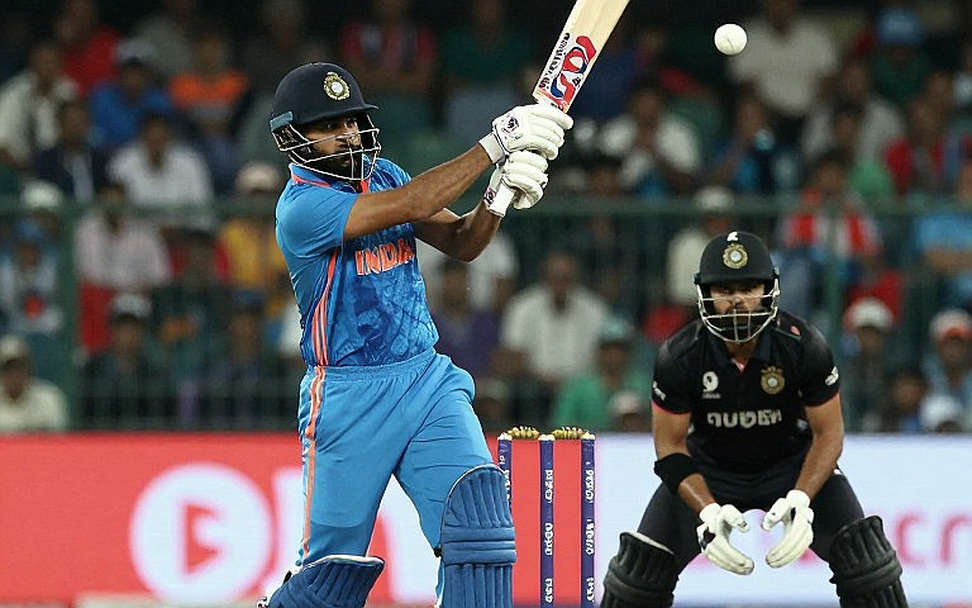
Technique has adapted. Shorter swings, reduced backlift, straighter bat paths — because hitting hard requires the bat to arrive on the ball's line quickly. Sweeps and reverse sweeps against spin are now baseline skills, not rarities. Ramp shots and lofted drives against pace are part of routine training. Players chase the effective shot, not the elegant one.
Crease use has changed too. Batters step back to wait for slower balls and step out to turn yorkers into full tosses. The wide yorker remains among the hardest deliveries, because neither a straight bat nor a change of position fully solves it, and an entire training culture has grown around that one ball.
The death overs remain the hardest calculation: batters want two runs a ball, bowlers want a wicket. Variation matters, but so does a batter's pre-decided zone — knowing which side to hit and which ball to leave. Those who re-decide every ball lose control fastest.
Bowlers did not stand still. Slower balls, cutters, slow bouncers and changes of pace are now standard. Rashid Khan showed that variety can restrain batters without extra speed. Jasprit Bumrah and Shaheen Afridi showed that yorkers and relentless accuracy remain the strongest defence. Trent Boult's precision makes the same point: without the new ball, accuracy still strangles scoring.
Captaincy has become probability management: which bowler matches which phase, whether to hold a slower bowler back so Bumrah or Afridi has an over in reserve. There is no bulletproof formula, only situational judgement.
Fielding has gained qualitative importance. Boundary riders no longer merely catch; they turn two into one. With over-rate penalties, teams cannot waste time, so every throw and dive matters more. Good fielding also simplifies bowling plans, because a bowler can invite the big shot with less fear.
Physical and mental preparation has shifted. Rest management across a crowded calendar is now a major coaching decision. Playing one big shot after another demands not only strength but speed of decision-making: two balls to choose, and an error can decide the match. Mental skills and role-specific preparation are now part of practice.
Domestic and franchise cricket are the main laboratory. Talent used to be identified over long domestic seasons; now a short tournament can make a case. The benefit is wider opportunity; the risk is overvaluing a small sample. Selectors face a harder question: a burst of scoring in one season is not proof of durable capability.
The change has reached ODI and Test cricket. One-day scoring rates in the middle overs have risen, and intent has become a valued word in Tests. But the formats demand different things, and a batter who only attacks cannot survive the long game. The most valuable player is the one who can change the level of risk to suit conditions — anchoring like Virat Kohli, or changing a match in an over like Glenn Maxwell, Suryakumar Yadav or Jos Buttler. A squad may need both.
The risks are real. If every team adopts the same method, the game drifts towards sameness. Over-dependence on data can create new weaknesses, because a batter who knows where he will be attacked may narrow his own game. Scheduling load, injuries and expectations on young players all take a toll. Sustainable success belongs to those who treat data as an aid while keeping courage and adaptability.
T20 batting, in the end, is a management exercise. The total is never guaranteed, but every decision has a price. The side that understands that price best — when to attack, when to hold, when to force a bowler into error — moves ahead. Explosive hitting changed the look of the game; the patience to choose the right shot still decides who wins.

Related Players
Recommended
A Last-Ball Win for the Sixers, but the Fracture Sits in the Same Place on Both Sides2026-10-31
Maiden First-Class Tons for McFadyen and Manenti as South Australia Pile Pressure on Victoria2026-10-10
Naseem Shah Returns After Seven Months: The Real Signal Hidden Behind 3/362026-10-15
Oliver Davies' 253: Doubling a Season in One Innings and Setting the Fastest Sheffield Shield Double Century2026-10-10
The Eight Dimensions of Cricket Analysis: From Data to Decision2026-11-01
Recommended
India in the Headline, Australia in the Depth: Reading the Women's Rankings Update2026-10-30
The Dot-Ball Ledger: How Bangladesh’s Middle-Over Squeeze Reduced Sri Lanka to 1242026-09-30
Durban's 214 Runs, Gqeberha's Green Pitch and Rabada's Hamstring: South Africa's Twin Equation for a Comeback2026-10-15
Spin Casts a Shadow at Newlands, but the Decisive Question Lies Elsewhere2026-10-31
Rawalpindi's 82 Runs Are Not the Real Story: Four Numbers Buried Behind Sadaqat and Farhan's Storm2026-10-12
Recommended
Fifty Wickets, One Phone Call, and the Question Nobody Asked2026-10-31
Kent's Leadership Vacuum at the Moment of Promotion: How Simon Cook's Exit Blurs the Picture of Success2026-10-06
A Last-Ball Win for the Sixers, but the Fracture Sits in the Same Place on Both Sides2026-10-31
When the Empty Cell Is the Story: Missing Rows and the Discipline of Verification in Cricket Data2026-11-01
Wisden's 'Cricketers-In-Law' Quiz: A Silent Data-Ledger Built from Test Cricket's Archive2026-10-21
Recommended
Testimony of an Empty Block: When the Analysis Ledger Came Back Blank2026-10-11
Spin Casts a Shadow at Newlands, but the Decisive Question Lies Elsewhere2026-10-31
Cameron Green Is Coming Back, but the Real Question Before the WTC Finale Is His Bowling Quota2026-10-26
Price vs Performance: What the IPL Auction's ₹27 Crore Actually Buys2026-09-26
19/4 in 3.1 Overs: What the Raipur Scoreline Says Beyond the Result2026-10-18